
Recognizing That I’m “That Guy” In Every D&D Game
09.17.26 // 12:41am
(Note: This was written on my period. I suffer from pretty awful PMDD, to the point of having flu-like symptoms and a stuffy nose! So take everything with a grain of salt, future me. Maybe things aren’t as bad as you thought they were?)
For as long as I can remember, I have always loved roleplaying.
I played pretend on the playground, brandishing plastic lightsabers and fighting fake aliens with my one friend underneath our little tree. When I was a little older, I carried that love of pretend into roleplaying online, specifically on Neopets.com.
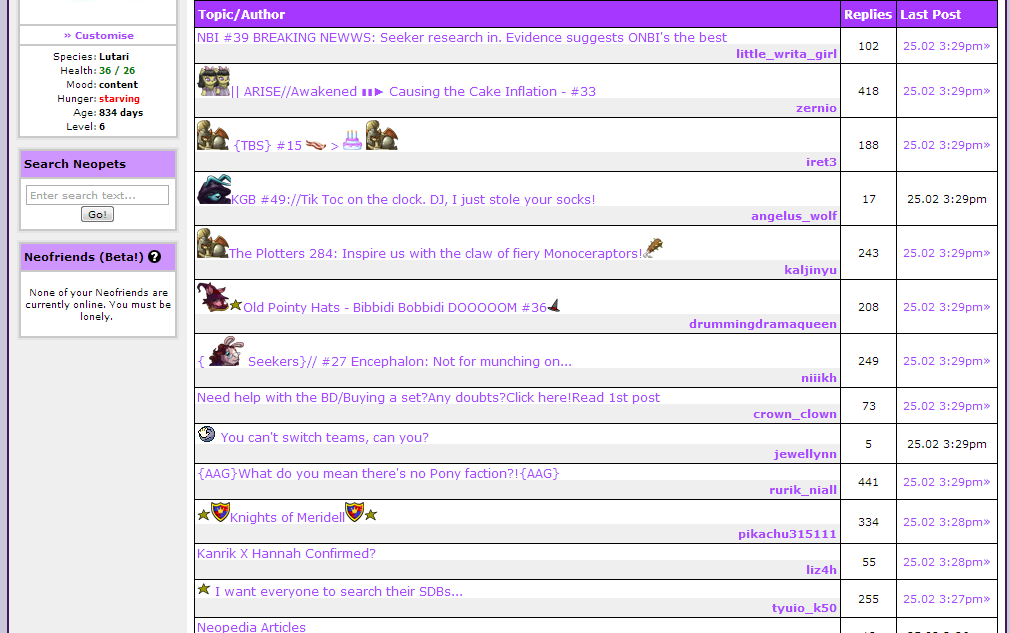
I remember they were called the Neoboards. I also hung out on the chatplay board too.
Contrary to what you might expect, roleplaying on Neopets didn’t involve the Neopets themselves. There was a board on the forums where people would roleplay any and all topics in the short-form and short-term. You could only have 300 characters per message, and each thread would disappear after about a day—that encouraged fast-paced, simple roleplays you could pop into for a couple of hours. I remember playing after school and roleplaying “gifted” scenarios, which were pretty much just offbrand X-Men. My first “OC” was a boy with dragon wings named Cooper Capone, who could fly—but not very well—and breathe fire… but not very well. There was an emphasis, back in the day, of not having “Mary Sue” type characters, so I tried very, very hard to make sure my character wasn’t perfect. He had to be equal to everyone else.
I also roleplayed a lot of fandom scenarios. You know… we didn’t call it fandom, back in the day. I wish I could remember the term for it. Mixed media? TV show/video game/anime crossovers? I dunno. But essentially, the plot involved all of these characters from different franchises getting dropped into a random setting and having to uncover some sort of mystery or fight some evil creature. I almost always played the villain in these roleplays, because without a villain, there was no plot—and without a plot, the roleplay would fizzle out almost instantly. I usually played Vaati from Minish Cap, and by the end of the roleplay, I was always beaten to a bloody pulp… and then I couldn’t play anymore, because my character was dead. But that was okay. I wanted to make sure everybody else had fun.
And then, in high school, I got very, very into Dungeons & Dragons.
I started playing D&D with 4th Edition, and I kind of hated it. I envisioned it being like those online roleplays in real life—with intrigue, character dynamics, banter, etc. Unfortunately… it wasn’t really like that. I was in a group with probably, like, 12 people and one very stressed out DM, and nobody got to do anything. I cringe at the idea of that now—I consider six too many people, and I can hardly imagine double that. I wound up sitting around bored, and the campaign lasted barely 3 sessions. I think it was Lost Mines of Phandelver, and we didn’t even get through the first cave.
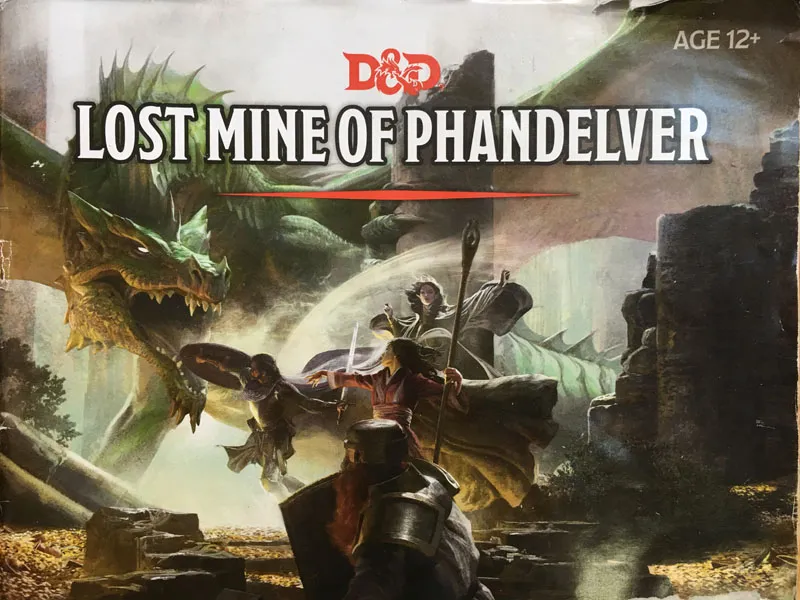
You know, looking it up, it doesn't seem like Phandelver had a 4th edition version? It was definitely Phandelver, though… hmm…
A couple years later, 5e came out, and my friend group picked it up again. And… I liked it a little bit more. I have fun memories of being a player—mostly when I created easy, one-note characters I didn’t put a lot of stock into. I remember Rhubarb, an annoying Bullwug rogue. I remember Eshriel, a cool and sexy Legolas-like elf ranger. I had fun in the same way one has fun playing Wingspan; it’s a good time, but it’s not exactly life changing.
That’s not what I wanted from roleplay. I wanted something genuine. I wanted to play interesting, nuanced characters in a rich, alive world. I love my friends very deeply, but they are not very genuine people. They lack the capacity to shed their masks of irony and truly larp out a heartfelt scene. I have brought so many characters I’ve poured my soul into to the table, and by the end of the night, they’re nothing like the character I envisioned—because everybody else is pretty much just playing themselves… so I get embarrassed and feel the need to “play myself”, too.
This is what I assumed, anyway. But, over time, I think I’ve come to the conclusion that it’s not my friends’ fault, nor any other tables—I’m just That Guy.
In an effort to chase the high of online written roleplay, I joined so many online/in-person D&D groups with strangers over the years. My entire college career involved showing up to strangers’ houses to roleplay with them… kind of horrifying in retrospect. I have spent cumulatively thousands of hours playing D&D with people I barely knew—and the most depressing thing is… I don’t think there was a single game group I enjoyed.
I have lots of stories from this era of my life. One time I joined a game that was actually a family therapy session between two estranged brothers—and when the two got into an argument, the game instantly fell apart, and it was only then that the DM told us they were related and they were trying to use the game to reconnect. Another time, I joined a group where the DM had a crush on a player, and she invited me to a secret group chat where she talked about sneaking into his room to steal his things and watch him sleep. I’ve played with white supremacists and anarchists living on a commune. I’ve played with Mormons and sex workers and age regressors and neonazis and doctors and artists.
I did not make a single lasting friend.
That’s on me. I’m shy. I have such a deeply difficult time connecting with people, and I’m even worse at reaching out in fear of rejection.
There were a scant few instances where I did enjoy the games, and I even made friends. Not super close friends, but pleasant acquaintances… but that only managed to happen if I happened to be running the game.
Why is this? Well, I think it all comes back to Neopets.
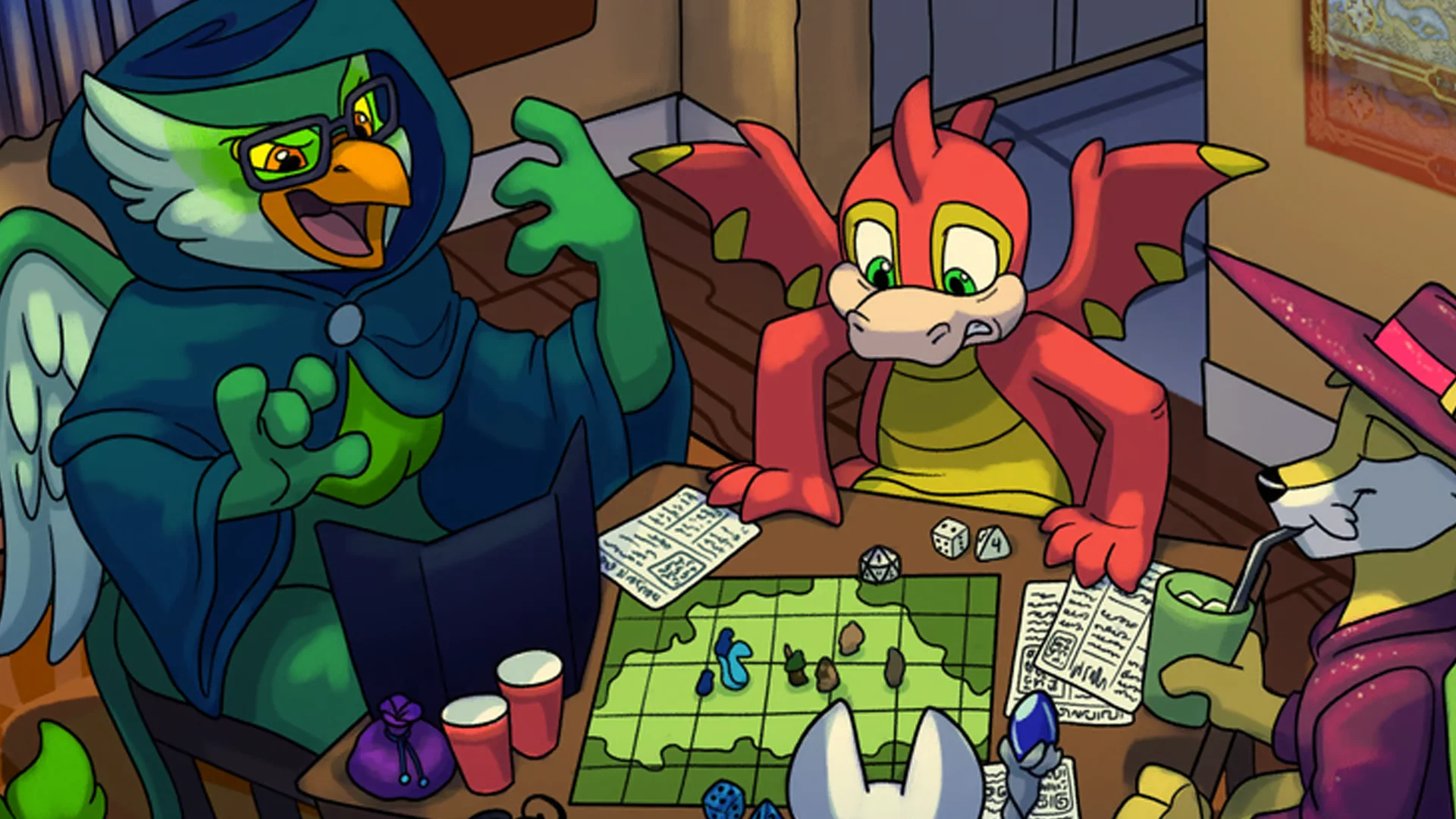
And maybe a little bit of autism—but I’m not officially diagnosed, so who can say for sure.
On Neopets, it was drilled into my skull that everyone had to be equal. Your character could not in any fashion be better than anyone else’s or you’d be accused of powerplaying/godmoding/having a Mary Sue. In addition, you could not post too much, or again you’d be accused of powerplaying. You were expected to follow intrinsic, invisible guidelines of courtesy. You didn’t roll for who won a fight: you took turns. The fights were meant to progress a narrative, not function as part of the game.
TTRPGs are not like that—and, more importantly, TTRPG players are not like that. D&D in particular is a game with set successes and failures… and this is the fun part for a lot of people. Succeeding at a check feels good. Failing at a check can be fun. People come to D&D to feel like they’re winning a game against their Dungeon Master—or at the very least, winning against the fictional, intangible enemies the Dungeon Master erects for them.
I’m a baby. I don’t like failing at tasks. In my brain, failing at checks is only fun or good if the failures are still meaningful—if some other task still winds up accomplished, or my character grows or changes in some way. Otherwise, it just feels like I’m wasting time. I am so particular with my character creation; if I stat heavily into Arcana and have written a long, elaborate backstory about how my character is an expert at necromancy… it doesn’t make sense to me why I should even have to roll for Arcana to identify a necromancy spell. I should just know the spell, because it would make sense for me to know the spell. In a book, that’s how it would go, right?
But instead, if I fail, I’m left feeling upset. This is what I created my character for… and they can’t do it. It goes against their themes and their being. Not to mention that grinds the progression of the game to a halt; if I fail at climbing a rope, suddenly, the next 45 minutes are spent trying to roll high enough to climb the mountain a different way. You’re telling me I can’t just take 30 minutes to figure out how to work the damn rope?
I recognize it’s silly to think this way. It’s just a game, and the dice are an element of randomness. And yet, I can’t shake the ugly feeling that grips my chest whenever I play a tabletop.
Many DMs adopt the mindset of “failing forward”. This means that even if you fail, you still achieve something, even if it’s not in the way you originally expected. I do like and appreciate this—it’s something I attempt to implement in my games rather than just saying “you fail, moving on”—but many DMs don’t bother, probably because of the game’s origins as a “DM vs player” battle simulator.

Like in the story of the Dread Gazebo.
To be honest, though, that isn’t what bothers me the most. What bothers me are the concepts of equality and balance. I learned to roleplay by paying attention to how many posts other players had made and trying to match them, or include them if their character was by themselves. I was always hyper-aware of how much I was participating and how much other people were participating in an effort to make sure everybody was equally able to contribute to the narrative. If somebody was posting too much, the group would reprimand them. If somebody was posting too little, the group would try to bring in their character more or slow down to meet them at their pace.
In my experience with D&D, it’s just not that kind of system. In every game I have ever been in, there has always been one player who entirely steamrolls over everyone else. They hog the spotlight, they chat to every NPC, and they will not shut up. Similarly, there’s always one or two people who are quiet and don’t talk at all. The latter is equally obnoxious… but it’s that group I find myself slotting into. The issue is that I find it very hard to “fight” for a chance to speak up for myself. I am waiting until everyone has taken their turn and there is a moment of quiet before speaking, because I am petrified of potentially speaking over people and, quote-unquote, powerplaying. The problem is that those former kinds of players never slow down, meaning that there is never an opportunity for me to speak.
I am just not the kind of person who is able to forge my own opportunity. I have such a hard time speaking over people. If I try to participate and I get talked over or ignored… it makes me feel genuinely awful—like wanting to throw up awful. So I don’t, and I simply wait my turn with my legs crossed and hands folded like a good, obedient little dog, waiting for a command to speak that never comes.
It makes me feel so deeply pathetic. This could be solved if I just… grew a pair, I guess. If I didn’t fear rejection and ridicule, even among my own friends, and just treated it like the low-stakes game it is, there wouldn’t be a problem. But, fundamentally, I’m unable to see it as a game: I still see it as a narrative. I want everyone to have equal impact in the story, because that’s how a good ensemble-cast story should be written… but tabletops just aren’t that kind of medium.
Unless, of course, I’m the DM.
I love DMing.
I have been a “forever DM” for many years now—for such a long time that I guess I forgot about my storied history with being a player until this most recent game with my friends. I really enjoy it. I’ve GM’d for D&D, Vampire: the Masquerade, and other systems… and I have a lot of fun. As a DM, my hyper-awareness of the amount of time everybody has participated is a boon: if someone hasn’t spoken in a while, I can call upon them and give their character something special to do. If someone is monopolizing the game, I can tell them that and pivot to someone or something else.
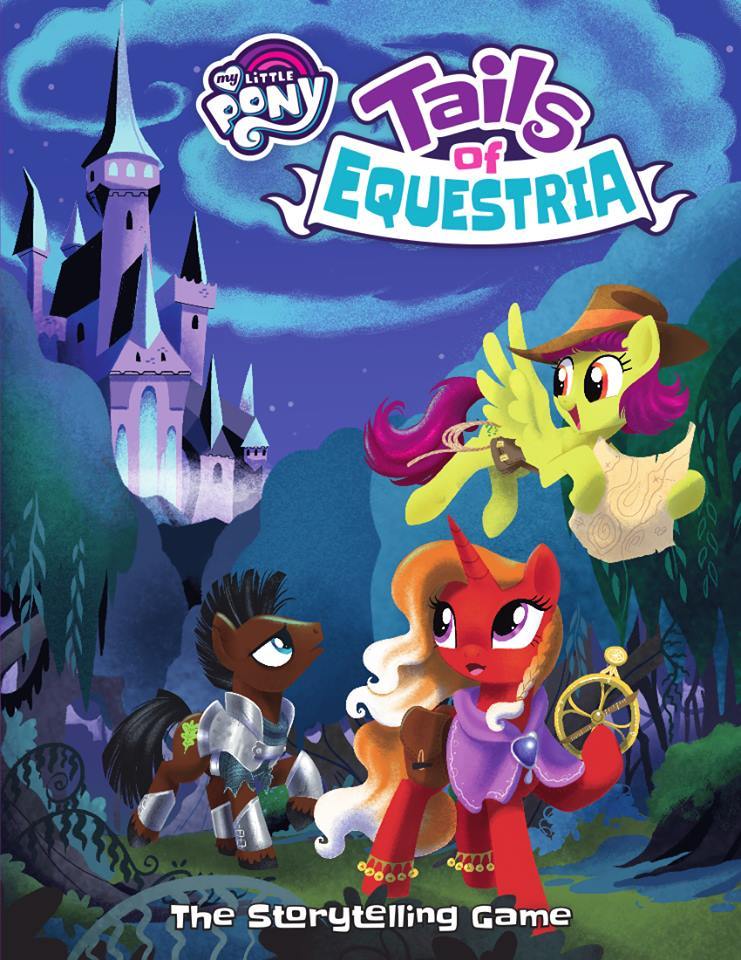
ToE is legitimately one of my favorite systems to run. The other MLP system kinda sucks.
In addition, I can craft a narrative that involves all players equally. I can pull from all of their backstories and make all of them the main character for at least an arc. I enjoy doing this. It feels like a creative writing exercise, being able to craft a session where everybody can thrive. I enjoy mixing up elements of randomness too to keep myself on my toes—and if people fail, that’s okay. I will never let them fail ultimately, but I will instead have them fail forward, tumbling the game in a different, but still fun, direction.
I’m not sure if I’m any good at GMing, but I do like it. I’ve found that I like modules more these days, as it’s nice to have something to catch you when your players start going too far off the rails. But I inject these modules with my own pieces of creativity, as well as the players’ in the form of their own character motivations.
GMing is also less of a burden for my anxiety. That probably sounds weird; I find that most TTRPG players feel like GMing is the most anxiety-inducing role you can have, because you are responsible for so much and there are so many eyes on you. For me, though, GMing gives me a free pass to speak whenever I want. People expect it of me! I don’t have to fight with people or politely wait my turn. I can interject whenever I feel it’s necessary, and I can also prompt other people to speak or hush depending on the moment. When I’m a player and don’t have this power… I seethe. I think to myself, Why isn’t the GM as hypervigilant as I am? Can’t they tell I haven’t spoken in a while? Why can’t they tell me it’s okay to talk?
I recognize that this is ridiculous. I have tried for so many years to get better about this… but I think I’ve reached the conclusion that it’s just the way I am. Like how some people don’t like board games, I suppose some people just don’t like tabletop RPGs… and I’m one of those people. I guess.
This is so painful for me. Why can’t I just be normal? Why can’t I participate in this game and enjoy it like everybody else? Why do I have to take it so seriously and overanalyze everybody’s individual participation like we’re team members working on a project rather than friends playing a game?
It especially hurts because I love creating characters. Maybe that’s another reason roleplaying is so difficult for me; I love my characters too much, and if the narrative does not push them in the way I’ve meticulously plotted out their arc, I get irritated. Why doesn’t the DM understand the intricate web of themes and intrigue I worked so hard to weave into my character’s backstory, I ask, even though I recognize it’s ridiculous for a GM to retain six different characters’ multi-page-long backstories.
All of my most beloved OCs started as roleplay-oriented characters. In fact, other than my fursonas, every single character on my OC page is a character I created to roleplay with. Most of them are tabletop characters, but some of them, like Celescoix, were created to engage with specific online roleplay communities, like Final Fantasy XIV. I love all of them so much, and when I say I love D&D, I’m usually thinking about how much I love those characters.
And yet… every single game I’ve played with every single one of those characters has been miserable. Every game with Amezi has crashed and burned because of interpersonal drama. Cecil was too intense. Respite was too nice. Sometimes the groups fizzled out, sometimes I left, sometimes I was kicked out.
At a certain point, if it’s happened with every game you’ve ever been in… you kinda have to admit that you’re the common denominator.
During online games with strangers, there were usually huge clashes of personality among the players. For example, one of my fellow players was a neonazi—and he and I occasionally got into it. And I gpt annoyed, because… hey, isn’t it the DM’s job to, uh, not invite a neonazi to the game? Isn’t it the DM’s job to regulate and manage their players and make sure to properly vet them?
I’ve had a ton of great experiences when I’ve found online randos to DM for because I made them fill out a giant form, and I only chose the people I knew I would vibe with and I knew would vibe with each other. And it was lovely! But, out of the dozens and dozens of games I’ve been in as a player, Every Single One has been a shitty experience.
I don’t think I’m the greatest DM who’s ever lived. I wouldn’t say I’m even particularly good at it. But I do think I’m able to at least properly vet neonazis, you feel?
Do you think I maybe shouldn’t have gone off of my SSRIs. Don’t answer that
As it is, I don’t even know how a player should feel. I’ve never been in a game with a DM who I can objectively say was capable of managing the amount of players or plot they took on. That’s another thing… most games I’ve been in have had, like, 6+ people, and in a group of that many—even divorced from gaming—I shut down on a good day. I just don’t think you can juggle the spotlight of that many people without someone feeling left out.
My dream is to play a game focusing on interpersonal drama, like a PbtA hack, with 3-4 other players with an intuitive GM. I feel like it would fix me. I feel like having one experience like that would right all of the wrongs in my head and make me more normal when it comes to what to expect from a tabletop….
…But it’s wishful thinking. I’m sure even in that perfect scenario, I’d still find something to complain about, because ultimately we’re playing a game and not writing a book—which is all I really want to do.
Oh man. I haven’t even talked about my projection yet.
So. I don’t know what flavor of neurodivergency this is—but man, I project way too much on my characters. Project isn’t the right word… it’s like they project onto me? If I’m roleplaying a character who’s angry, I will get angry—like, spitting, seeing-red, trembling with rage angry. If my character is sad, I will feel sad to the point of crying. In an effort to understand every intricacy of the little dude I’ve made up in my mind, I merge my soul and identity into them, to the point where it distorts my psyche. Usually emotions don’t run that high in games, but if they ever do, I find that I’m emotionally devastated by the end of the session.
I’m able to compartmentalize in other ways. I don’t hold the actions of other players’ characters against the players’ themselves—that would be crazy. But when it comes to my own characters… it’s hard to tell where they end and I begin. I think I have such a frayed sense of self that they usurp me.
So I’m sitting there, shaking and trembling with this intense emotion that’s not my own, unable to relieve it in any way because my anxiety won’t let me speak up and engage with the story. And it’s… horrible. It’s such a bizarre feeling, like my body has been hijacked. It’s like I’m in a state of sleep paralysis for the four hours we’re playing the game.
I don’t feel this way when I’m DMing. Sometimes I get annoyed when characters don’t respect an NPC I’ve made, but I get over it pretty fast. It’s only when I’m a player. I think it’s because when I’m not participating, I’m ruminating… and that only makes the emotion more intense—and with no outlet for it to escape, it takes over my every thought.
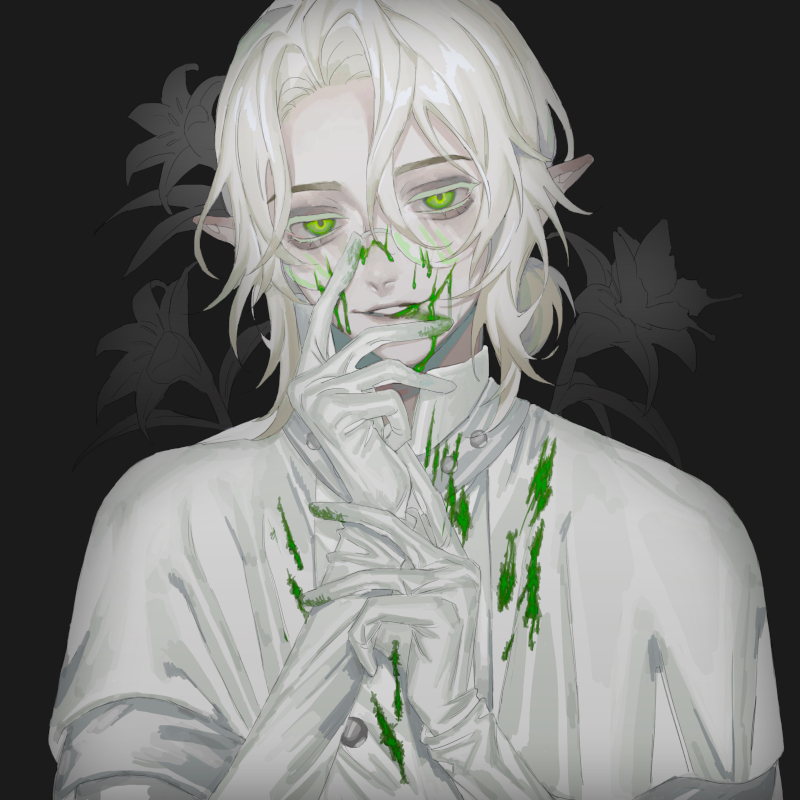
I think if I played a one note bullywug instead of Mx. Ivory with their paragraphs upon paragraphs of trauma I wouldn’t have this problem.
So, what does this mean?
I think I have to say goodbye. After over fifteen years of trying to be a player… I’m throwing in the towel. I admit that I do not and will never enjoy being a player. It’s not for me, and that’s okay. I will never try to join a game with online randos ever again, unless I’m DMing it.
If my friends want to run games… well. I might participate in one shots, but after the game I’m currently in concludes, I will not be participating in long form RPGs with them—unless certain players learn not to steamroll over me.
“Have you told the people who are steamrolling you your issue?” No, because I’m a wuss. And it’s also not my place! I’m just a player. Saying to another player, “Hey, can you stop talking? I want to talk now,” sucks balls. I just… feel like that’s the DM’s responsibility? If I was a DM and a player criticized another for talking too much, I’d feel like I’d failed in my duty to properly manage the game. So I don’t want to do that. Perhaps reasonable people would be able to talk to their friends about their issues… but I genuinely feel like I’m being unreasonable. I recognize that asking for special treatment is unreasonable. I recognize that I kind of suck to play with. So, rather than attempting to navigate through a solution to a problem where I’m the singular catalyst behind the prompt, I’d rather just remove myself. People will have more fun without me being a negative Nancy the whole time, anyway.
Typing that out is making me cry. Isn’t that ridiculous? I can admit that I am the problem player. All of my issues stem entirely from my own hangups. Because of that… I feel like asking people to change the way they enjoy playing for me is selfish. I don’t want to be selfish. All, all I want is for everyone to be equal, for everyone to be having fun. If I am bringing the game down, then I’m going to remove myself from it. It’s the morally correct option.
I want to leave the game I’m in now with my friends. I think that would be for the best. It’s the moral thing, the just thing. But it makes me so, so sad. It’s making me cry, ugly little wet smears spattering across this cheap keyboard. I don’t want to stop playing. I want to have fun. I want to be normal, just like everybody else. But something is critically wrong with me… and despite how hard I’ve tried, I don’t think I can ever change that part about myself. One wonders why I get up every day if I will always be a scared, pathetic creature who can’t speak up, who can’t form words, who contributes nothing to the world other than making other people uncomfortable and upset. The moral thing would be to take myself out of every equation that disrupts someone’s happiness. I just want everyone to be happy.
The thing that makes me feel the worst is that this is my boyfriend’s first time DMing. His first time, and I’m over here being a whiny little chud, making everything about me. Can’t I just fucking get over it? Can’t I just support him as he’s doing this cool and awesome thing? But no—one person speaks over me, and I feel like dogshit for the rest of the evening while taking it out on everyone around me. I feel like he, too, would be better off running the game without me dragging him down.
I’m writing the latter half of this after a particular game of D&D that I had to leave in the middle of because I started to have a meltdown. Somebody steamrolled over me too many times, nobody prompted me, and I couldn’t handle it anymore, so I left. But… leaving the game like that was also disruptive, wasn’t it? I would rather just fade into the background and be ignored, forgotten, but I worry that my exit read as selfish and childish—because it kind of was. I feel like there’s no way to handle my feelings in a respectful, discreet way. I wish I didn’t have any.
Ah. This sucks. I’m trying to make myself feel better by saying, “It’s just a preference! You like DMing more, and there’s nothing wrong with that. Just DM in the future!” But that doesn’t really address the root of the problem, does it? It doesn’t address that there’s something fundamentally wrong with me—some sort of disgusting, decaying weirdness that I’m sure everybody can clock after one second of looking at me. It doesn’t address the fact that I want to be able to engage in games with my friends like a normal person who doesn’t have meltdowns whenever things don’t go my way.
I don’t know where I’d even start unpacking this. I don’t have a therapist, but man. Is it better to try to improve and be constantly disappointed in yourself, or admit you’re a flawed person and you’re incapable of change?
…Maybe I’ll just stick to fiction.